Vladimir Lenin
M: Son of the CenturyVladimir Lenin is the absent center of several Italian political encounters: a revolutionary leader whose success gives hope to Nicola Bombacci, whose government prioritizes diplomatic recognition over exporting revolution, and whose methods are later invoked by Benito Mussolini. The book’s portrait moves between Lenin as an international symbol and the ailing man who, near the end of his life, turns an Italian delegation away from factional argument and toward the views of workers and peasants.
Revolution and International Example
The book places Lenin’s revolution within a Europe unsettled by war and the return of millions of soldiers. In its account of the upheaval, the Russian Revolution has already succeeded by October 1917, and the red flag appears across at least sixteen fronts, extending from Vilnius to Vladivostok. The scale of this struggle is associated not only with Lenin’s political victory but also with the Red Army created by Leon Trotsky in less than a year. The army’s expansive conception of warfare makes Russia appear to be the source of a new political and military order, rather than simply another state emerging from the war.
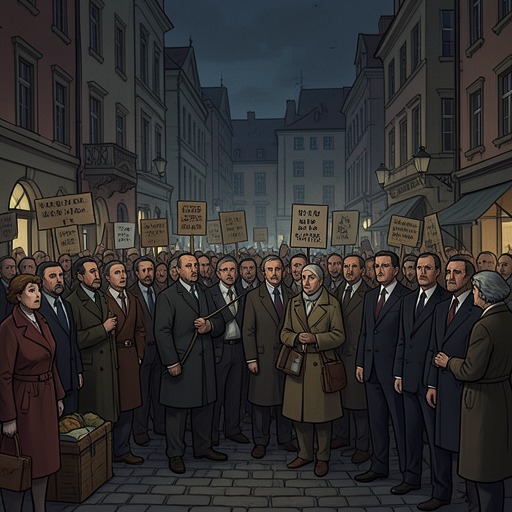
That example travels. In Budapest, Béla Kun establishes the Hungarian Soviet Republic, while his government’s alliance with Lenin’s Russia accompanies attempts to recover lost territory through military action against neighboring states. In Italy, the prospect of revolution is likewise measured against Russia’s achievement. At a Milan rally on July 20, 1919, Nicola Bombacci tells workers that the red flag has triumphed in Russia and urges that Russia should be present in Italy as well. The crowd’s response registers how readily Lenin’s revolution can be made into a promise for an Italian future, even though the rally’s festive atmosphere does not itself amount to an uprising.
A Revolutionary Hope in Italy
Lenin’s influence in Italy is also mediated by the Communist International. Vladimir Degott, its representative in Italy, assesses the Italian socialist leadership as hesitant and divided: he doubts Giacinto Menotti Serrati’s willingness to call for revolution, considers Gennari short on initiative, and judges that Antonio Gramsci understands the Russian Revolution without yet being able to influence the masses. Degott and, through him, Lenin place particular hope in Bombacci. Bombacci is imagined as someone who might join the advancing revolutionary vanguard when the decisive moment came.
That expectation sits uneasily beside Bombacci’s actual conduct. A former seminarian who had been judged unfit for military service, he is described as a man who knows he could not hurt a fly. At a gathering in Bologna, the workers who came expecting a revolutionary call are left without one. Lenin’s importance in this episode therefore lies partly in the gap between the confidence invested in him and the uncertainty of his Italian adherents: Russia offers a successful precedent, but it cannot make the Italian movement’s decisions for it.
Bombacci’s journey to Copenhagen in March 1920 makes that distance concrete. He leads a delegation officially arranged through the National League of Cooperatives and backed by Milan’s socialist administration, while also carrying the Italian government’s political endorsement. Since December 1919, Bombacci has worked to persuade Italy to reopen relations with Lenin’s Russia. He treats trade discussions as secondary, hoping instead that contact might lead to recognition of the Soviet state and, beyond that, offer a chance to discuss revolution with people who had made one.
The Soviet representatives he meets sharply narrow those hopes. Leonid Krasin tells the delegation that his mandate is to obtain official recognition of Moscow, and nothing more. Bombacci then turns his expectations to Maksim Litvinov, the Soviet foreign affairs commissar. After Bombacci launches into an account of an imminent Italian revolution, Litvinov responds that the Socialist Party is strong but its revolutionary faction is weak, and that Italian socialists would not last long in power. His central point is practical: Russia has already had its revolution, and its urgent task is to restore political and commercial relations with capitalist states. The meeting exposes a divide between Bombacci’s international revolutionary aspirations and the Soviet government’s immediate diplomatic priorities.
Lenin as a Political Measure
Lenin’s name also enters the Italian debate as a measure of strategic calculation. At the second fascist national congress, Benito Mussolini argues for cooperation with productive sectors and for setting aside institutional preconceptions; the movement, he says in effect, should be prepared to retain the monarchy if necessary. When he turns to religion, he invokes Lenin’s decision to stop short of confronting the authority of the Holy Synod. Mussolini uses this example to support a political strategy that respects religious power rather than treating anticlericalism as an absolute principle. The episode shows Lenin’s influence reaching beyond the Italian left: even a rival movement can cite the Russian leader as a precedent for tactical restraint.
A more direct appropriation concerns political terror. At a meeting in January 1924, Mussolini expresses admiration for Lenin’s authorization of the Cheka to use terror during the early consolidation of the communist state. His advisers respond by proposing the name Fascist Cheka for a clandestine unit intended to strike at fascism’s enemies. Lenin’s example is thus detached from its revolutionary setting and repurposed by an opposing movement as a model of coercive statecraft. The allusion records the reach of his methods while making clear that their meaning changes with the politics that claim them.
The Ailing Leader in Moscow
In October 1922, an Italian communist delegation encounters Lenin not as a distant emblem but as an ill man. Antonio Gramsci has returned from a six-month stay in a sanatorium in poor health. Lenin, too, has already suffered a stroke when he receives the Italians. He welcomes them smiling and speaks Italian to Amadeo Bordiga and Camilla Ravera, recalling the period of his youth as an exile in Capri. When Bordiga expresses concern for his health, Lenin replies that he is well but must follow the doctors’ severe instructions so that he does not fall ill again.
The delegation’s conversation soon shifts from Lenin’s condition to events in Italy. Bordiga raises relations with the Socialist Party, but Lenin cuts off that line of discussion and asks what is happening with the fascists. As Bordiga repeats familiar analyses, Lenin interrupts to ask what workers and peasants think of those events. The question leaves the head of the Italian communists unable to answer. The scene contrasts party leaders’ established arguments with Lenin’s insistence on popular responses, and it gives his last political presence in the book a practical focus: the people affected by events matter more than another round of disputes between organizations.
The contrast is sharpened by the timing. As fascists in Naples call for a march on Rome, leading Italian socialists travel to Moscow, convinced that the threat is not significant. Their confidence proves misplaced. Lenin’s attention is fixed on the danger they fail to take seriously, even as illness increasingly restricts his own public and political life.
Death and Political Afterlife
Lenin’s decline continues alongside the controversy surrounding Bombacci. After Bombacci speaks cordially of the possibility of an alliance between revolutionary Russia and fascist Italy, the Italian Communist Party demands that he resign as a deputy. Bombacci refuses, but the party’s order stands. At the same time, news arrives from Moscow that Lenin has suffered another stroke, is confined to a wheelchair, and has ceased communicating with the world. The book places the political defeat of Bombacci’s attempted bridge between the two revolutions beside the physical silencing of the leader whose achievement had inspired it.
Lenin dies on January 21, 1924. His death closes the period in which Bombacci can imagine speaking directly with the makers of the Russian Revolution, but it does not end Lenin’s presence in Italian politics. His revolution remains a standard by which the left measures its own failures and hopes; his diplomatic realism frustrates revolutionary expectations; and his secret police become a precedent cited by Mussolini’s circle. Across these different uses, Lenin is less a continuous participant in the Italian narrative than a powerful political reference point—one whose authority survives even as the man himself falls silent.